False Friends in Serbian for Polish Speakers

16 False Friends in Serbian for Polish Speakers

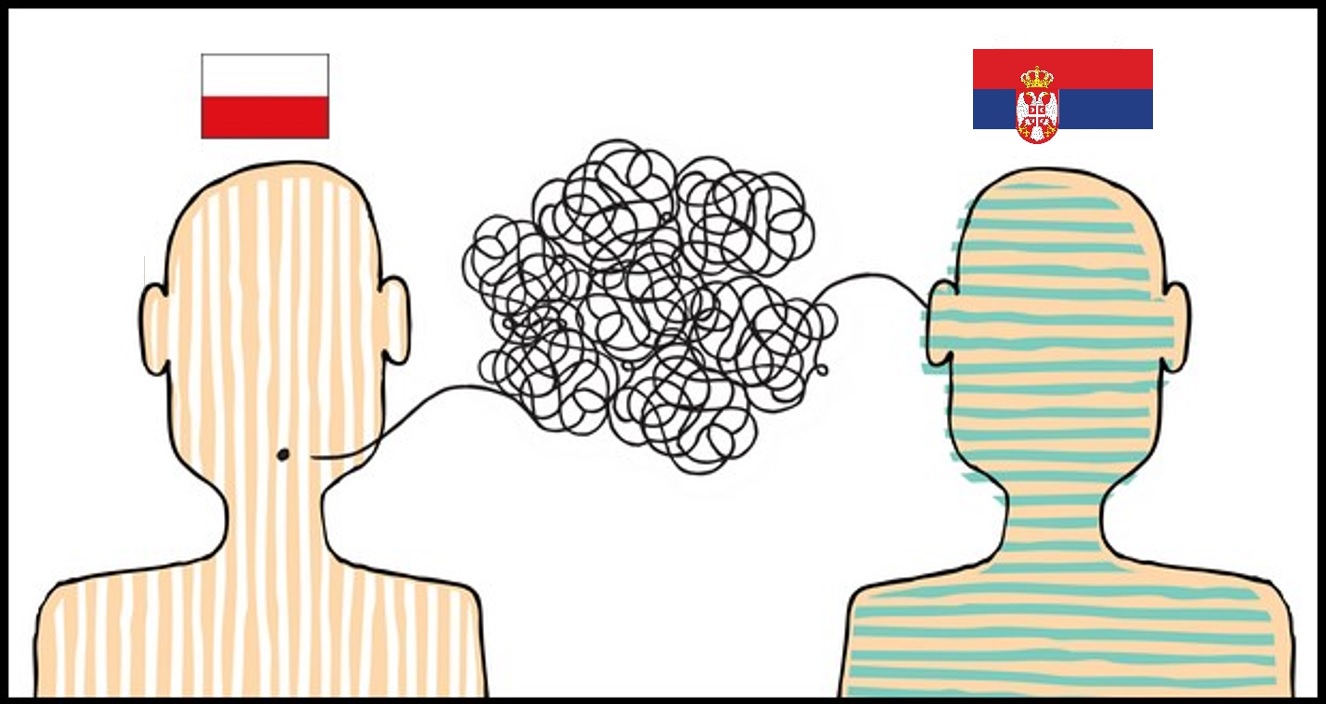
While some English speakers make jokes about polishing their Polish, a simple Serbian sentence like “they remembered him” could make a Polish speaker think that they “forgot him”! The culprit which can cause this fuss is the language mechanism known as “false friends”. In this article you will learn 16 false friends in Serbian for Polish speakers

Need a quick 0 boost? We get you approved instantly—no long wait, no hidden fees. Simply fill out the short online form, and if you’re eligible, the money lands in your account within minutes. It’s perfect for covering surprise bills or urgent expenses while keeping your credit score intact. get your 0 loan in minutes and say goodbye to stress—because life moves fast, and so can your finances.

False friends is a linguistic occurrence that was first defined in 1928, although some attempts to do so date back to the 17th centry. The term false friends refers to the linguistic hazard when the words in different languages are pronounced or spelt in a similar or even the same way, but their meanings are different.

When learning a foreign language, it’s very important to learn the examples of this linguistic occurrence so as to avoid the pitfalls they create. In this article, we are going to look closely to some of the  most promiment false friends in Serbian for Polish speakers.

It is interesting to note that, while they both are Slavic languages, Serbian (alongside Bosnian, Croatian and Macedonian) belongs to the subgroup of South Slavic languages, whereas Polish is a West Slavic language. Although there are many similarities between these two languages, there are also the differences (taking the form of a false friend).


False Friends in Serbian for Polish Speakers: the Verbs

A Polish speaker learning Serbian, or a Serbian speaker learning Polish, must stop and think before using quite a few verbs.

For example, the verb tłumaczyć in Polish means to translate, or explain in some contexts, whereas in Serbian the verb tumačiti means to interpret.

Moreover, the verb podróżować in Polish means to travel while Serbian people may associate with a verb družiti se (to be friends with somebody) since the word stems from the noun drug which in Serbian means a friend.

Additionally, the verb chodzić in Polish has a general meaning and means to go (and as such takes part in constructing many useful expressions) while in Serbian its meaning is very narrow – hodati means to go on foot.

A language learner should also stop and think before using the verbs such as zakazać i ratować. The former means to prohibit, in Serbian the verb zakazati means to make an appointment, while the latter in Polish means to save and its Serbian equivalent  ratovati has little to do with saving, it means to wage war.

The same can be said for the verbs uvaźać and zapomnieć.  Uważać means to think or to watch out, while in Serbian the verb uvažavati means to have respect for somebody.

Finally, while zapomnieć may remind us of the Serbian verb zapamtiti (to remember) in Polish it actually means to forget!


Serbian and Polish False Friends: The Verb Table


 Polish meaning  Serbian meaning 
tłumaczyć  to translate, or explain  tumačiti  to explain, to interpret
podróżować to travel družiti se  to be friends with
chodzić to go hodati  to walk
zakazać to prohibit zakazati to make an appointment
ratować to save ratovati to wage war
uważać to think, to be careful, to watch out uvažavati  to respect
zapomnieć to forget, to neglect zapamtiti to remember


False Friends in Serbian for Polish Speakers: the Adjectives


The false friends can also be found among the adjectives. For example, a very common Polish adjective przystojny is not the same as the Serbian adjective pristojan. In Serbian, pristojan means well-mannered while in Polish this adjective is used for describing men and it means handsome.

There is another adjective for describing people, a very frequent one, but with different meanings in Serbian and Polish. Namely, while gruby in Polish means fat or thick, in Serbian grub is rough, not smooth.

The Polish adjective szary is another example of how false friends can operate. In Polish this adjectives refers to the color grey and in Serbian šaren means colorful. Both words designate colors, but as we can see szary and šaren are different types of colors.


Serbian and Polish False Friends: The Adjectives Table


 Polish  meaning   Serbian  meaning 
 przystojny  handsome  pristojan  well-mannered
 gruby  fat, thick  grub  rough, not smooth
 szary  grey  šaren  colorful


False Friends in Serbian for Polish Speakers: the Nouns

The final group of words that we are going to inspect are the nouns. Most false friends come from this group of words. For example, there is a word  zawod in both Polish and Serbian. However, in Polish it means profession (we can often hear it in the question „Jaki masz zawód?“ meaning „What is your profession?“) while zavod in Serbian is a special public institution, foundation.

Furthemore, there are two words that are used to talk about time, quite similar in the two language, but their meanings differ. While  godzina in Polish means an hour, a Serbian word godina means a year.

Also, in Polish to say a year we need a noun rok while in Serbian rok means a deadline.

Interestingly enough, if you would like to say that you like shopping and paintings in Polish you need the words zakupy and obraz. These two words exist in Serbian as well, but zakup is a rent while obraz is a cheek.


Serbian and Polish False Friends: The Noun Table

Polish meaning Serbian meaning
zawód  profession  zavod  public institution
 godzina  hour  godina  year
 rok  year  rok  deadline
 zakupy  shopping  zakup  rent
 obraz  painting  obraz  cheek
 słowo  word  slovo  letter


Serbian for Polish Speakers

This article was about 2 x 16 words which look similar in Serbian and Polish, but whose meanings are different. Since both Serbian and Polish are Slavic languages, it is quite reasonable to encounter such words when learning these languages or when trying to translate from one into another.

As you have seen, for certain words it is impossible to decipher their meaning just because we already speak a similar language.

If a Pole says that this article was about słowa (which means words in Polish), but a Serb does not agree (since in Serbian slova means letters), then we should remember that false friends are responsible for all the confusion.

Guest post by Smiljana Rakonjac
Serbonika

Najbolja metoda za učenje srpskog jezika

The best method to learn Serbian

Corona in Serbia: Interview with Dr Chiheb Guerfel

1. sezona – 4. epizoda – 35 minuta

Need a quick 0 boost? We get you approved instantly—no long wait, no hidden fees. Simply fill out the short online form, and if you’re eligible, the money lands in your account within minutes. It’s perfect for covering surprise bills or urgent expenses while keeping your credit score intact. get your 0 loan in minutes and say goodbye to stress—because life moves fast, and so can your finances.

Foreigners Speak Serbian #4

Corona in Serbia

Interview with Dr Chiheb Guerfel

Corona in Serbia 2020 is the main topic of this episode. 

This is the 4th episode in the “Foreigners Speak Serbian” series of my Serbian language podcast. In this episode Magdalena and Dr Chiheb talk about the Corona in Serbia: the virus pandemic in 2020, the current situation in Serbia and how to deal with the epidemic.

Dr Chiheb Guerfel is a Tunisian who lives in Novi Sad, Serbia. He is a CEO and founder of Poseidon CRO group of companies engaged in epidemiologic and clinical research. Visit Dr Chiheb’s company website.

English and Serbian subtitles are available in the video.

We talked about:

– State of emergency in Serbia

– Corona virus pandemic 

– Symptoms of the Covid19 disease

– What we can do in such circumstances

/Transkript intervjua/

Magdalena: Danas je 17. april 2020. godine. Prošlo je nešto više od mesec dana otkako je u Srbiji proglašeno vanredno stanje zbog epidemije korona virusa. Da vas podsetim, prvi slučaj korona virusa u Srbiji registrovan je šestog marta. A 15. marta proglašeno je vanredno stanje u zemlji.


Prema poslednjim podacima Instituta za javno zdravlje u Srbiji je do sada ukupno testirano 32.566 ljudi koji su ispunjavali kriterijume. Od toga je 5.690 zaraženih. 3.765 je hospitalizovanih ljudi. Na respiratoru je 122 osobe, a umrlo je 110 ljudi. Zaraženo je oko 600 zdravstvenih radnika, lekara i medicinskih sestara, petoro ih je preminulo.

Ali imamo i dobre vesti. Broj izlečenih je 534. Najavljeno je otpuštanje još 200 hospitalizovanih ljudi u narednim danima. U Srbiji je počela proizvodnja hlorokina, leka protiv korone. U Kragujevcu, ekipa inženjera i naučnika razvija četvrti prototip alternativnog respiratora koji će možda moći da se koristi i u kućnim uslovima.

Nove podatke o stanju u Srbiji, o korona virusu u Srbiji možete videti svakoga dana od 15 časova na sajtu Ministarstva zdravlja covid19.rs.

Iako su mnogi ispočetka sumnjali, sada je, nadam se, već svima jasno koliko je situacija ozbiljna.

Danas je sa mnom doktor Šiheb Guerfel, Tunižanin koji živi i radi u Novom Sadu i vodi grupu kompanija Poseidon CRO za epidemiološka i klinička istraživanja sa kancelarijama u Tunisu, Maroku, Mađarskoj, Crnoj Gori i Srbiji.

Doktore, dobar dan.


Dr Šiheb: Dobar dan.

 …


/English translation/

Magdalena: Today is April 17, 2020. It’s been a little over a month since the state of emergency was declared in Serbia due to the Corona virus epidemic. Let me remind you, the first case of the Corona virus in Serbia was registered on March 6th. And on March 15th a state of emergency was declared in the country.

According to the latest figures from the Institute of Public Health in Serbia, 32,566 people who met the criteria were tested so far. 5,690 are infected. 3,765 people are hospitalized. On respirators there are 122 people, and 110 people died. About 600 healthcare workers were infected, both doctors and nurses, five of them died.

But, we also have good news. The number of people cured is 534. The release of 200 more hospitalized people was announced in the coming days. The production of chloroquine, a Corona drug, has begun in Serbia. In Kragujevac, a team of engineers and scientists is developing a fourth prototype of an alternative respirator that will perhaps be used at homes.

New data on the situation in Serbia, on the Corona virus in Serbia can be seen every day from 3pm on the Ministry of Health’s website covid19.rs.

Although many doubted at first, it is now, I hope, already clear to everyone how serious the situation is.

Today, with me is Dr. Chiheb Guerfel, a Tunisian who lives and works in Novi Sad and runs Poseidon CRO group of companies for epidemiological and clinical research with offices in Tunisia, Morocco, Hungary, Montenegro and Serbia.

Good afternoon, doctor.


Dr. Chiheb: Good day.

…

Meet The Host of the “Foreigners speak Serbian” Podcast

Corona in Serbia: Interview with Dr Chiheb Guerfel 1

Magdalena Petrovic Jelic

Dedicated Serbian language teacher with a mission to create the best place on the web for learning Serbian. Polyglot and perpetual language learner. True grammar lover. Mother of a 3 years old Viktor and tireless story-teller.


Posvećena profesorica srpskog jezika sa misijom da stvori najbolje mesto na internetu za učenje srpskog jezika. Poliglota i večiti učilac jezika. Iskreni ljubitelj gramatike. Majka trogodišnjeg Viktora i neumorni pripovedač.


Subscribe to my YouTube channel!

Related Pages

Start Learning Serbian Today!

The sooner you start learning, the sooner you’ll start talking. Take action today! Choose one of our Serbian language courses or contact us with any question you might have.

Corona Virus in Serbia Fought by Distance Learning

Corona Virus in Serbia Fought by Distance Learning

First cases of Corona virus in Serbia, isolation measures and the 1st experiment with distance learning in public schools – a Brilliant Solution for Quarantine

Need a quick 0 boost? We get you approved instantly—no long wait, no hidden fees. Simply fill out the short online form, and if you’re eligible, the money lands in your account within minutes. It’s perfect for covering surprise bills or urgent expenses while keeping your credit score intact. get your 0 loan in minutes and say goodbye to stress—because life moves fast, and so can your finances.

Television programs are never on in my home. We have a TV set, but we use it simply to play movies and shows we want to see. We had never watched news on our TV before – until the night when the president declared a state of emergency because of the Corona virus in Serbia. Before that moment, the epidemic was something happening abroad, away from us. Now it was real.

My mother and brother, who live in different cities, were visiting us that weekend. My husband improvised an antenna and we watched the news together, for the first time. We were shocked. When they were leaving, it felt strange saying goodbye and not knowing when exactly we’ll be able to hug them again.

This made us think of the adversities we’ve been through in the ‘90s. We now have romantic memories of the dark evenings we told stories over candles, or concerts in protest against the bombing. But I realized this was far different. Back then, we were together. Without electricity or heating, in fear or in blessed childish unawareness, but together. Now we’re being isolated in an already isolated hi-tech society.


Corona Virus in Serbia

How did this all start? In December 2019 a disease appeared in China, caused by a new virus from the Corona family. Allegedly, it originates from the animal and meat market in the city of Wuhan in China. From there, the illness spread to other countries to the extent that the World Health Organization declared a pandemic on March 11, 2020.

The first case of Corona virus in Serbia was confirmed on March 6, 2020. It’s a 43-year-old man from Subotica (North Serbia), who traveled to Budapest and visited his ill sister. Returning home, he felt some symptoms and responsibly isolated himself and got in touch with his doctor.

The second case was registered after 3 days: a Chinese man, Serbian resident for years, who had traveled to China for a visit and probably was infected there.

After that, Corona virus started spreading and appearing in different cities throughout the country.

From March 16, 2020, all schools in Serbia are closed, as well as kindergartens, daycares, museums, gyms and theaters. All events and gatherings are canceled. Public transport is partly disrupted. Many flights are canceled. People are advised to stay at home.  Since March 18th we have curfew: nobody can go out from 8pm to 5am.

The whole country is blocked, even though we have less than 100 confirmed cases of infected people. (Exactly 97 on March 19, as I’m writing this. You can look for fresh information every day on the official page of the Corona virus in Serbia.)

The people around us are perplexed, somewhat scared. Most of them still have their sense of humor and good spirits, still cracking jokes about garlic and rakija. Others are stacking lots of food and disinfectants, even though the politicians assure us that all necessary supplies will be ensured. (It’s understandable, because we still remember empty shelves from the ‘90s.) Restaurants are encouraged to base their work on delivery service, cafes and bars work with restrictions, but pharmacies and supermarkets will be available.

Corona Virus in Serbia Fought by Distance Learning 2

Image source: BBC News na srpskom

Distance Learning against Corona Virus in Serbia

In order to stop the pandemic and to prevent the healthcare system from collapsing, the government declared we have a state of emergency. Before closing the schools, they made sure to organize remote classes, probably until the end of this school year (mid-June).

There are lessons on national television for students of primary schools (6 to 14 years old) and high schools (14 to 18). Their teachers are also working remotely, sending and checking their homework assignments and preparing the children for final exams.

Universities are organizing online courses. Some of them already have accredited online programs, others will record lectures and upload them to online platforms. In any case, all the teachers will stay in touch with their students through regular email correspondence.


View this post on Instagram


A post shared by Serbian Language Courses (@serbian.courses) on

Learn in your quarantine!

Now I look at our rarely used TV with different eyes. If our son were only 3 years older, television would have become an important source of education. The school didn’t simply stop. The children are getting the support online, from their teachers, and offline, from their parents. They are expected to study and write homework. (God have mercy on the overwhelmed working parents!)

This is a good lesson for all of us to learn. Along with staying at home and avoiding social contacts, washing hands and making sure not to get and transmit the Corona virus, the best thing we can do is to keep our minds occupied. Not with the pandemic and panic, but with studying and improving ourselves.

We can’t change the boat we’re in, but we can find a way to get the best in the given situation.

Learning a language is always a good thing anyway. It’s a great distraction and fun, it improves your cognitive functions, and when the pandemic is over, you’ll be richer for another language. And learning online not only keeps you safe from viruses, but also enables you to connect with people globally.

Corona Virus in Serbia Fought by Distance Learning 3

Serbonika

Najbolja metoda za učenje srpskog jezika

The best method to learn Serbian