All differences between hteti (will) and želeti (want) in Serbian

All differences between hteti (will) and želeti (want) in Serbian


Need a quick 0 boost? We get you approved instantly—no long wait, no hidden fees. Simply fill out the short online form, and if you’re eligible, the money lands in your account within minutes. It’s perfect for covering surprise bills or urgent expenses while keeping your credit score intact. get your 0 loan in minutes and say goodbye to stress—because life moves fast, and so can your finances.

Many Serbian language learners are confused about the verbs hteti (will) and želeti (want) in Serbian. They feel unsure about when to use them and how they’re different or similar. In this article I’ll explain all the differences and similarities of the verbs hteti and želeti, and how their usage differs from want and will in English.


The verbs hteti (will) and želeti (want) in Serbian sometimes have synonymous meaning, but often there are differences. Let’s start by clearing up the basic confusion about the verbs will (hteti) and want (želeti) in the Serbian language.

The verb hteti means ‘to want’, and the verb želeti also means ‘to want’. That’s their synonymous meaning. They are both used to say ‘to want something’, or ‘to want to do something’. But each one of them also has a different, specific meaning.

Hteti means to want, but its specific meaning is will. And this is exactly the same as in the English language, where we use ‘will’ to form the future tense. In Serbian, we also use hteti to form the future tense.

Želeti means to want as well, but its specific meaning is to wish. The noun želja means ‘a wish’, so moja želja is ‘my wish’.


The synonymous meaning and usage

Since they’re synonymous and they both mean ‘to want’, we can say:

  • Hoću ovu knjigu. I want this book.

or we can say:

  • Želim ovu knjigu. I want this book.


We complemented both verbs with the accusative case, obviously, to say “I want (to have) this book”.

  • Hoću ovu knjigu.
  • Želim ovu knjigu.


We can also complete both of these verbs with da and a verb in the present tense:

  • Hoću da čitam. I want to read.
  • Želim da čitam. I wish to read.


Or we can complete them with a verb in the infinitive form:

  • Hoću čitati.
  • Želim čitati.


Both of these verbs can be completed with the da + the present tense or with the infinitive. The infinitive is more used in the North and in Western Serbia, while da+present is dominant in Belgrade, in Central and South Serbia.

However, in standard Croatian it is not acceptable to use da + the present tense. You have to say: Hoću čitati. Želim čitati. Therefore in standard Croatian, these two verbs can only be completed with an infinitive.


The specific meaning and usage

  1. HTETI is stronger than ŽELETI

They are often used synonymously, but there is also a slight difference, because hteti is stronger than želeti.

Hoću to da radim. I want to do it – it’s connected to the future tense, meaning “I will do it” versus “I wish to do it”. With želeti, it’s not so certain that I will eventually do it.

So hteti is more certain than želeti.


  1. HTETI in its short forms to ask what you want

We also use this verb HTETI, and usually in its short forms ćeš (the short forms come without ho-) in daily communication to ask what someone wants.

We don’t use so much polite expressions, like in the English language. We ask people directly what they want and we say quite bluntly what we want. And that’s not impolite, even though to an English speaker it may pretty much seem so.


For example, if my family and I are out at a restaurant, the waiter will come and say:

  • “Izvolite?” What can I bring you?

If I’m not sure what I want, I’ll ask my husband what he’ll have, so that I can get an idea about what we’re drinking. I’ll ask my husband:

  • “Šta ćeš ti?”, What will you have?


So we’ll have a quick exchange along these lines:


  • Šta ćeš ti? What will you have?
  • Ja ću I will have a coffee.
  • I* ja ću I will have a cup of coffee too.

*When you see the conjunction i (and) in an unusual place, it means ‘also’ or ‘as well’.


On the other hand, in the context of ordering and asking for food or drink, we do not really use the verb želeti unless we’re children. The children will say nicely:

  • Želim I wish some juice.
  • Molim sok. Please, (can I have some) juice.
  • Molim čašu vode. Please, (can you give me) a glass of water.

However, this is only for children. In an adult conversation, you will never hear something like that.


  1. HTETI for the future tense

When it comes to the future tense, we can only use hteti to form it. We never use želeti in this context. Read more about the future tense in this article.


These were the main differences about the verbs will (hteti) and want (želeti) in the Serbian language. I hope their usage is now clear to you. What’s left now is up to you: write down 10 sentences in Serbian and use each of these verbs 5 times.

 

Of course, if you prefer talking to real people and studying in a small group, join the conversation in our online group lessons at Serbonika!


Serbonika

Najbolja metoda za učenje srpskog jezika

The best method to learn Serbian

How to Find an Excellent Serbian Language Teacher

How to find an excellent Serbian language teacher

Do you get the impression that the number of Serbian language teachers and tutors has flooded the internet? I certainly do. In that wide variety, how can you find and recognize a good Serbian teacher? Not an easy task, I must admit.

Need a quick 0 boost? We get you approved instantly—no long wait, no hidden fees. Simply fill out the short online form, and if you’re eligible, the money lands in your account within minutes. It’s perfect for covering surprise bills or urgent expenses while keeping your credit score intact. get your 0 loan in minutes and say goodbye to stress—because life moves fast, and so can your finances.

Can a native speaker of Serbian be a Serbian language teacher? Probably, to a degree. Can any language teacher that speaks Serbian teach you the Serbian language? Certainly, to a degree. I’m sure you can learn a lot from them.

But in this article I want to explain how you can find an excellent Serbian teacher.

Have you tried finding a good Serbian teacher, and decided it was a difficult quest? I’m with you. Choosing a great teacher for yourself means finding that perfect mentor that will work with you, feel you and guide you.

Some might think that any native Serbian speaker can teach you. Or someone might have told you that they are graduated Serbian teachers, or graduated foreign language teachers. Well, I have some (maybe surprising) facts to share with you.


3 Surprising Facts about Serbian Language Teachers


1) Serbs that are translators or language teachers are not necessarily great Serbian teachers.

Most Serbian teachers you’ll find online are actually English language teachers that speak Serbian as their mother tongue.

However, the Serbian language has a specific structure that is very different from English, or Italian, or other languages (except most Slavic languages). To say the least, its two main peculiar traits that require special treatment are:

That’s why a different methodology is needed for teaching Serbian successfully – a methodology that teachers of other languages not necessarily know.


2) However, it’s of great help if your Serbian language teacher has had an experience of learning foreign languages.

The experience of learning foreign languages is extremely valuable for the teacher. They must remember the struggle of the beginner level: and it’s indeed hard when you’re trying to formulate sentences in a language you don’t know yet. I’d say that every foreign language teacher should start a new language every few years, simply to remind themselves what it looks like and appreciate the beginner’s struggle.

If your teacher can use the languages you both know in order to help you understand Serbian, that’s just awesome. But pay attention to limit the use of those languages in class – unless you and your teacher both agree that your lessons include chatting about languages and general knowledge of languages, as well as learning Serbian.


3) Even a Serbian language teacher degree is not a proof that one can teach Serbian to foreigners.

Most Serbian language teachers are actually taught to teach Serbian class to the Serbian children. They often carry the weight of grammar-centered teaching and a purist approach to the language. That is of no help to a foreigner learning their first words and sentences in Serbian. Too much grammar won’t help you learn how to speak Serbian as a foreign language.


A solution?

An ideal Serbian language teacher should be educated in how to teach Serbian as a foreign language. They could have learned that on their own, through years of teaching and testing, or at an education program.

A masters program for teaching Serbian as a foreign language appeared only in 2015 at the Belgrade University. There were no such programs before, so we are making progress in this direction. Every year we’ll have more and more teachers educated to teach Serbian as L2. Our teachers are all highly educated and trained for this, and they teach Serbian in mini groups at Serbonika.


But then we face the inevitable question: Seasoned teacher’s experience, or novice teacher’s enthusiasm? 

Ideally, you want to learn with someone who proved they can teach Serbian with success: someone who’s taken a number of foreign students beyond the A level. As in any profession, the more experienced you get, the more efficient you should get. That’s why a seasoned and successful language teacher’s hour must be more expensive than the novice one’s.

On the other hand, the beginner’s zeal and enthusiasm is enchanting! Novice teachers with proven study material and a good mentor can be an excellent choice.

Young Serbian teachers often encounter a lack of good books and materials for teaching Serbian. Truth is, most books and materials out there are far from good enough. That’s why I decided I have to write my own courses in the first place. Serbonika offers a clear structure and a recommended study plan that was built and polished throughout many years of teaching Serbian.  All our students use that plan with their teachers.


How to recognize a great Serbian language teacher in class?


  • A good Serbian language teacher knows balance between speaking and grammar.

A good Serbian teacher must find an ideal ratio of teaching grammar, vocabulary and conversation. Most people learn Serbian to talk to their friends and family. Some of them only want to learn “conversation”. However, grammar is very important for the Serbian language. You must learn it piece by piece and practice using it little by little from the very beginning. Otherwise, you will never be able to make or understand complex sentences, and will never reach an intermediate or higher level. That’s why the conversational methods like Berlitz can never work for Serbian beyond the beginner level.


  • An excellent Serbian language teacher has grammar-and-vocabulary-aware conversation skills.

The best Serbian language teachers are trained to speak to each student in a way they can understand. From very basic sentences, to complex explanations. Paraphrasing, reformulating and explaining the same thing in various different ways, is the most valuable skill a teacher should work on.

When the teacher’s speech takes into account your knowledge, you will be surprised to see how much Serbian you can actually understand from the very first lessons.


  • Every Serbian language teacher must practice tolerance.

Even if their ears cringe from the mistakes you make (because we language teachers are bewitched to correct mistakes), your Serbian teacher must know what to correct and which mistakes to ignore at a given stage. They should be patient and tolerant enough to let you think through and finish your sentence, like a good mother to her child – even if your grammar is completely broken.

In class, you must feel free to make mistakes and practice. And let’s face it: you will make lots and lots of mistakes – even at an advanced level! That’s expected and that’s what you must do.

But you too need patience and tolerance: learning Serbian, or any new language, takes a couple of years – that’s the norm. Apologies to all the polyglots that sell miraculous methods, but learning a language quickly is just impossible. They are twisting the definition of “fluency” by narrowing it down to the fluent A1 level.


How will you find your Serbian language teacher?

With all the above in mind, choose an educated teacher that seems determined to support and guide you in your path to mastering Serbian. Book a lesson, and listen to your heart. Because the contact with your teacher is personal. With every step further in your Serbian learning endeavor, with every hour you spend together, with every email you exchange, you will be becoming friends.

That’s why it’s important that you two can get along and like each other. He or she can be an excellent teacher, but if your personalities collide, you will probably fail to make an impactful student-teacher relationship.

When you do find that perfect match in a teacher, book a regular time-slot in your calendar. Be there for your lesson, rain or shine. Learning is a continuous process and it should become a habit built into your weekly schedule. Only then will your relationship with the teacher propel your learning, you will both enjoy the process and achieve great results.

Practicing with your teacher, in combination with the materials from the Serbonika’s platform, is a great method to ensure success.  And I truly hope that you will find your soul-mate teacher.

Being a Serbian teacher myself, I can say that there is no greater feeling for a teacher than taking a student from scratch to a discussion about globalization and human rights in a couple of years. My heart fills with joy and pride every time, as I watch the same feelings glow on my student’s face.


Serbonika

Najbolja metoda za učenje srpskog jezika

The best method to learn Serbian

Feet Speech: 8 Serbian Leg Idioms for English and Norweigian Speakers

Feet Speech:

9 Serbian Leg Idioms for English and Norweigian Speakers

Did you know that many Serbian leg idioms are actually the same in English and Norweigian? There are similarities, even though Serbian, Norwegian and English belong to different language groups. That was a surprise for me too!

Need a quick 0 boost? We get you approved instantly—no long wait, no hidden fees. Simply fill out the short online form, and if you’re eligible, the money lands in your account within minutes. It’s perfect for covering surprise bills or urgent expenses while keeping your credit score intact. get your 0 loan in minutes and say goodbye to stress—because life moves fast, and so can your finances.

Expressions that include a part of the body are found in all languages of the world. In this article, we will talk about expressions that contain the words “leg (noga/ben)” or “foot (stopalo/fot)”.

Idioms are often universal in many languages, but not always. Difficulties in understanding them may arise due to cultural and traditional differences. Learning idioms is very interesting and important because we use them spontaneously all the time. They have become an important part of everyday speech. And we can’t always understand their meaning even if we understand all the words literally. Their use, meaning and form often depend on the context and situation.

Let us now take a closer look at the most frequently used Serbian leg idioms, and compare them with their English and Norwegian counterparts, if there are. Through some examples, I will try to show you their fantastic world.

Serbian Leg Idioms, part 1: Similar expressions in English and Norweigian

Let us first take a look at 4 idioms that look the same in the three languages. Speakers of Norwegian and English who learn Serbian and vice versa, will not have much difficulty understanding the meaning of the folowing idioms.

Serbian Leg Idiom #1: “Stajati na svojim nogama”

If someone is independent and doesn’t want any help, we say: stoji na svojim nogama. The same expression appears in English (to stand on your own feet) and Norwegian (å stå på egne bein).

  • Ja stojim na svojim nogama, i neću tražiti ničiju pomoć.

I stand on my own two feet, and I will not ask for anyone’s help.

Serbian Leg Idiom #2: “Biti jednom nogom u grobu”

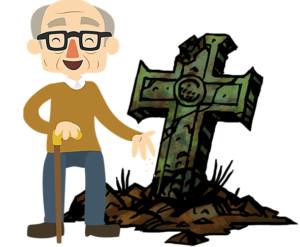
At first glance, this is an odd idiom, but its meaning (to be very old/dying) is the same as that in the English (have one foot in the grave) and Norwegian (å stå med det ene beinet i graven) equivalents.

  • Moj deda je star čovek. Često za sebe kaže da je jednom nogom u grobu.

My grandfather is an old man. He often says that he has one foot in the grave.

 Feet Speech: 8 Serbian Leg Idioms for English and Norweigian Speakers 1 

Serbian Leg Idiom #3: “Stajati sa obe noge na zemlji”

If you want to say that someone is very realistic and practical, you can use the idiom “stajati/biti sa obe noge na zemlji”, or in English (to have both feet on the ground) and Norwegian (å ha begge beina på jorda).

  • Ana je sanjar, ali njen muž je čovek sa obe noge na zemlji.

Ana is a dreamer, but her husband is a man with both feet on the ground.


Serbian Leg Idiom #4: “Stati nekome na žulj“

This idiom (to step on someone’s blister) in Serbian doesn’t mention legs or feet, but blister (*žulj/blister/blemme). However, it’s similar to the English “to step on someone’s toes and Norwegian “å tråkke noen på tærne“.

The meaning is to upset someone by touching their vulnerability.

  • Ceo dan je bila ljuta na mene, kao sam joj stao na žulj.

She was angry with me all day, as if I stepped on her blister.

TABLE 1 – Serbian leg idioms and their equivalents in English and Norwegian

Serbian (srpski/serbisk) English (engleski/engelsk) Norwegian (norveški/norsk)
Stajati na svojim nogama To stand on your own two feet Å stå på egne bein
Biti jednom nogom u grobu To have one foot in the grave Å stå med det enen beinet i graven
Biti sa obe noge na zemlji To be with both with on the ground å ha begge beina på jorda
Stati nekome na žulj To step on someone’s toes Å tråkke noen på tærne
Serbian Leg Idioms

Serbian Leg Idioms, part 2: Authentic Expressions

In addition to idioms in which the meaning and form are the same or very similar, there are, of course, those that are specific in the Serbian language. When I say “specific”, I mean that it is often difficult to find their equivalent in another language. But, learning them is interesting and a kind of adventure. 


Serbian Leg Idiom #5: “Biti bogu iza nogu”

If something is behind God’s feet (“Bogu iza nogu”), it does not mean that someone is non-religious, but that something is very far away. Interesting, isn’t it?

  • Ovaj grad se nalazi bogu iza nogu.

This city is so far away.


Serbian Leg Idiom #6: “Kriti nešto kao zmija noge“

Do you like snakes? Well, the next idiom (“kriti nešto kao zmija noge“)  compares you to them in some way. Don’t immediately think that someone has offended you. This idiom means that we hide the secret very carefully so that something is not revealed.

  • Moj brat Marko ima devojku. On krije njeno ime kao zmija noge.

My brother has a girlfriend. He hides her name very carefully.

 Feet Speech: 8 Serbian Leg Idioms for English and Norweigian Speakers 2

Serbian Leg Idiom #7: “Odsekle su mi se noge“

Speaking of snakes, do you like watching horror movies? If you like, your “legs must have been cut off” many times. Of course, not literally. In the Serbian language, when we want to say that we are very scared, we use the idiom “odsekle su mi se noge”.

  • Dok sam vozio auto, pešak je izleteo na ulicu. Odsekle su mi se noge zbog toga.

While I was driving the car, a pedestrian flew out into the street. I was scared because of that.


Serbian Leg Idiom #8: “Stajati na staklenim nogama”

You heard someone say “stajati na staklenim nogama (to stand on glass legs)”? No, it’s not about Cinderella (Pepeljuga). The meaning is very simple – to be without support, to feel unstable.

  • Njihov brak je na staklenim nogama. Oni se stalno svađaju.

Their marriage is very unstable. They are constantly arguing.


Serbian Leg Idiom #9: “Od malih nogu”

In Serbia, you will most often hear the expression “od malih nogu”, which means from an early age. We use this phrase every day.

  • Milan je tvrdoglav od malih nogu. 

Milan has been stubborn since he was little. 

TABLE 2 – Serbian leg idioms with literal translation into English and Norwegian

Serbian (srpski/ serbisk)

English (engleski/ engelsk)

Norsk (norveški/norwegian)

Biti bogu iza nogu

To be behind gods feet

Å være bak guds føtter

Kriti nešto kao zmija noge

To hide something like a snake hiding its legs

Å skjule noe som en slange som gjemmer bena

Odsekle su mi se noge

My legs have been cut off

Bena mine var kuttet av

Stajati na staklenim nogama

To stand on glass legs

Å stå på glassben

Od malih nogu

From a small legs/feet

Fra små føtter

Serbian Leg Idioms

This article was about the Serbian leg idioms, some with their equivalents in Norwegian and English. In the 1st part of the article, there are idioms that have the same meaning and similar form. In the 2nd part, there are those that ar not easy translate and understand.

Of course, the body idioms often appear in one language, while in another language the same idiom contains no words related to body.

We can conclude that there are great similarities between these three languages at the level of phraseology, although they belong to different language groups. This makes it much easier for anyone who wants to learn Serbian.


Fun Fact: Leg for Foot!

Did you know? In everyday Serbian, we often use the word “noga” (leg) instead of  “stopalo” (foot). That is, “noga” can mean both leg and foot.

In English and Norwegian, this difference is clearly defined. 

We use the word “stopalo” more as a technical term, when we need to be precise. So don’t be surprised if a Serb uses the word “leg” instead of “foot” when speaking English!

Guest post by Vladimir Jakovljević

Serbonika

Najbolja metoda za učenje srpskog jezika

The best method to learn Serbian