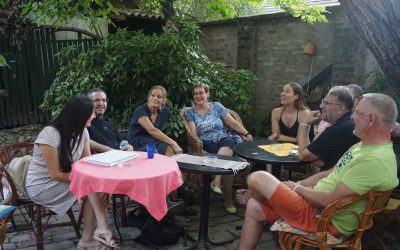
Serbian Language Summer School: an intense experience! Language lessons combined with culture classes, tourism, gastronomy. Many activities with one goal: study Serbian and use it to learn about culture and life
More than ”10 Ways to Say Hello in Serbia”
More than “10 Ways to Say Hello in Serbian”
All the ways to greet people in Serbian, but not only: updated with commentary and insight written 3 years after publishing the video.
Need a quick 0 boost? We get you approved instantly—no long wait, no hidden fees. Simply fill out the short online form, and if you’re eligible, the money lands in your account within minutes. It’s perfect for covering surprise bills or urgent expenses while keeping your credit score intact. get your 0 loan in minutes and say goodbye to stress—because life moves fast, and so can your finances.
As I’m writing this, it’s been more than 3 years since we made and published this video about different ways to say “hello” in Serbian language. And it still brings many people to this website.
„Natural Serbian“ was such a great idea. It was fun to make, and…
Surprisingly exhausting!
Because I’m a teacher, not a YouTuber!
But I think the concept was good, and I may get back to it once I decide to take a break of making these serious learning materials for my Serbian language school Serbonika.
Publishing this video has brought me valuable insights:
- There are lots of idle kids on YouTube, and
- I’m getting old!
Seriously, some comments people left made me realize new things about how we say hello in Serbian:
1.Shortened greetings that I mentioned in the video (‘bro jutro, ‘bar dan and ‘bro veče) are something my grandmother, and sometimes my father used to say. It’s almost vanished!
2. „Pozdrav“ actually became much more common in the last 10 years. It sneaked into our spoken language from the written form, and now it is actually quite common – especially among the young.
3. Some kids mentioned „eee!“ – but it’s not a greeting, I don’t give them that. It’s only an interjection, like “hej”.
4. If you have very patriotic friends, they will want you to know one more greeting: „Pomoz’ bog“ or „Pomaže bog“ (meaning “May God help you”). But it’s very, very old and its usage nowadays can only be intentional and not spontaneous.
Saying hello – basics first!
If you’ve just started learning Serbian, you should first take a look at this newer video, now included in Serbonika, to learn basic Serbian greetings and expressions, and then continue with the old video for more advanced and fun greetings.
(The transcript is still under the second video.)
Now you’re ready to go beyond the common “Dobar dan”, “Zdravo” and other basic Serbian greetings.
In this video I give you 10 different greetings we use in Serbia and explain when to use which.
Transcript:
How do you greet people in Serbia? How should you answer to their greetings? What should you say if you meet someone twice in one day?
Ja sam Magdalena i danas ću vas naučiti 10 načina da kažete „zdravo“ na srpskom.
I’m Magdalena and today I’ll teach you 10 ways to say hello in Serbian.
The most common ways to say hi in Serbian
Let’s start with the greetings I’m sure you already know. Dobro jutro, dobar dan, dobro veče.
You know what they mean: dobro jutro (good morning), dobar dan (good day or good afternoon), dobro veče (good evening). But do you know exactly when to say which?
- Dobro jutro – is a greeting we say when we wake up and until about 10 or 11 AM. Do not say „Dobro jutro“ late, because if you say it late, we’ll know that you woke up late.
- Dobar dan – After about 10 or 11 o’clock, you can start saying „dobar dan“, in formal situations and use this greeting throughout the day, until:
- Dobro veče – When do we start using „Dobro veče“? Well, it depends on the season, because once when it starts getting dark, you can safely start saying „Dobro veče“. So, in winter it will be about 5 or 6 pm, and in summer it will be after 7 or 8 pm.
These three greetings are sometimes shortened, so you can also hear:
‘bro jutro, ‘bar dan, ‘bar veče or ‘bro veče.
The three greetings are formal, and „Dobro jutro“ is both formal and informal, so we use it every day in our family: „Dobro jutro!“ after waking up.
Informal Serbian greetings
Serbian informal greeting is Zdravo! It actually means „healthy“, so you’re wishing someone good health when you say it.
We also use Ćao! which borrowed from italian (ciao), like in many languages.
You can even double those: „Zdravo zdravo!“ „Ćao ćao!“, and we usually do that with acquaintances. We just acknowledge them in the street, to whom we do not intend to say anything more than a simple greeting.
Pozdrav! This is a greeting that actually means ‘a greeting’, „Pozdrav“. It’s usually used by men, mostly in writing, in emails, chats or messages. Often written as „poz“ or „pozzzz“ for an extra emphasis. However, some people also say it, especially to a group: Pozdrav svima! (hello everybody) Pozdrav, ljudi! (hello people). And, again, it’s mostly men who use it.
And here comes my favorite:
It’s just one simple question used as a greeting among friends and family: „De si!“ If we translate it literally, it means „where are you”. However, if we want to ask someone where they are, we will use the full form: „Gde si?“, the full word „gde“. And, on the other hand, if we want to say a greeting (like: where are you, I’m so happy to see you, where have you been for so long), then we will say „de si“, without the initial sound „g“: „de si“ or „di si ti“.
We can say „de“ or „di“.
In some regions, like Montenegro and Bosnia, you will also hear „đe si!“, „đe“.
This greeting is often combined with „ti“, or „de ste vi“, or with „bre“, or with personal names or nicknames.
So, we’ll get: „De si ti!“ „De si bre!“ „De si bre ti!“ „De si bre ti, Marija!“
This simple question-greeting implies that you haven’t seen someone for a while, that you’ve missed them and that you’re happy to see them again. I will say it to a friend I haven’t seen for a few days or weeks, but I will also say it to my son after his nap. It is very used and very widespread.
Advanced Serbian greetings
Now, I’m gonna give you an extra insider tip: If you meet someone again the same day, do not repeat the same greeting! If you say „dobar dan“ and after a few hours „dobar dan“ again to me, I would think „Wow, this person doesn’t even remember that we’ve already met today.“ You can say something like „O, opet ti!“ (oh, it’s you again) which is quite informal. Obviously, you will say „o, opet vi“ if you’re addressing to more than one person, or even if you’re addressing formally to someone.
If you’re entering a store or a post office again, you can say „izvinite, opet ja“ (excuse me, it’s me again). You can also be formal with „Dobar dan / Dobro veče još jednom“ (Good day/evening once again).
And the last greeting, and my personal favorite, is „Treći put častiš“. This means: „if we meet for the third time, you’re buying me a drink“. That’s something we’ll always say if we accidentally meet a friend for the second time in the street, and there’s almost a small competition who will say this first: „Ha, treći put častiš“ (Ha, you’re buying me a drink next time that we meet).
However, it doesn’t actually happen that we really do meet for the third time and that we actually have that drink, but it’s a really common thing to say.
And to summarize, let’s list all the greetings we use in Serbian:
- Dobro jutro – ‘bro jutro
- Dobar dan – ‘bar dan
- Dobro veče – ‘bar veče, ‘bro veče
- Zdravo – zdravo svima – zdravo zdravo
- Ćao – ćao ćao
- Pozdrav! Pozdrav svima! Pozdrav, ljudi!
- De si! De ste vi! Di si ti! Di ste!
- Opet ti! Opet vi! Opet ja! Izvinite, opet ja.
- Dobar dan još jednom! Dobro veče još jednom!
- Treći put častiš
***
A ti? Kako ti pozdravljaš svoje prijatelje? How do you greet your friends?
Now that you know many options for saying hello in Serbian, you’re ready to continue to this page and learn 10 different expressions for saying goodbye.
by Magdalena Petrovic Jelic
Founder of Serbonika
Serbian language teacher and entrepreneur, language lover and polyglot, but also a mother and a relentless storyteller.
On a mission to create the best web space for learning Serbian: Serbonika.

Recent Posts

The 1st Serbian Language Summer School

All about Teaching and Learning Serbian: an Interview

All Shapes of the Future Tense in Serbian and Croatian Language

All differences between hteti (will) and želeti (want) in Serbian

How to Find an Excellent Serbian Language Teacher

Feet Speech: 8 Serbian Leg Idioms for English and Norweigian Speakers

False Friends in Serbian for Polish Speakers

Corona Virus in Serbia Fought by Distance Learning

Serbian Christmas Traditions in the 21st Century

Serbian Verbal Aspect, an Essential Guide for Beginners

Fear of Speaking Serbian – 6 Best Tips on Overcoming Your Foreign Language Anxiety

The Magnificent Slivovitz – plum brandy

Talk about Love in Serbian: 15 Ready-to-use Serbian Love Phrases

How similar are Serbian and Croatian? 7 Biggest Differences

Hot Serbian Summer: 8 things to survive the heat in Serbia
Serbonika
Najbolja metoda za učenje srpskog jezika
The best method to learn Serbian
The 1st Serbian Language Summer School

All about Teaching and Learning Serbian: an Interview
If you wander about the core principles of my teaching and the method I’ve developed for learning Serbian, don’t miss this interview I had with Michael of the English Podcast in Serbia. We talked all about teaching and learning Serbian as a foreigner.

All Shapes of the Future Tense in Serbian and Croatian Language
So many forms to express the future tense in Serbo-Croatian! What are all of them and how to make sense? Read on to learn all shapes of the future tense in Serbian and Croatian.

All differences between hteti (will) and želeti (want) in Serbian
If you’re puzzled about the verbs hteti (will) and želeti (want) in Serbian, unsure when to use which, that’s common. Let’s learn all their differences and similarities to clear up the confusion.