
Meet the Serbian capital: talk about Belgrade in Serbian
Do you know Serbia? What do you know about Belgrade, the capital? Can you tell that in Serbian?
Watch this video to learn about Belgrade in Serbian and to practice your listening skills.
Planning your trip to Serbia? Can you talk about Belgrade in Serbian? Learn a few sentences. Your hosts will love that!
Belgrade is the capital and the biggest city of Serbia. It has been named the “city that never sleeps”. Many young people love it for it’s night life. It is believed that whoever experiences Belgrade falls in love with it and returns to it often.
The most important site to visit in Belgrade is its famous fortress named Kalemegdan (Beogradska tvrđava Kalemegdan). It is located on the confluence of two rivers: Danube (Dunav) and Sava. The view of the rivers is magnificent.
Once you’re downtown, you shouldn’t miss Skadarlija – the famous bohemian quarter with restaurants and taverns, or as we call them kafana. There you can eat the local food, usually based on meet, and listen to traditional live music.
A video to teach you about Belgrade in Serbian
Here I want to share a video to help you learn different facts about Belgrade in the Serbian language. You can also use it to practice your listening skills.
When watching the video for the first time, focus on understanding the meaning and remembering the story line. After that, you can repeatedly watch and listen to the final part of the video, the text only in Serbian. That will help you really remember and internalize what you have heard in the video.
| the text Beograd, glavni grad |
translation Belgrade, the capital |
| Reč Beograd znači beo grad. Beograd je glavni grad Srbije. Nalazi se na dve reke. To su Sava i Dunav. | The word Beograd means white city. Belgrade is the capital of Serbia. It is located on two rivers. That are Sava and Danube. |
| Reka Sava polazi iz Slovenije, teče između Hrvatske i Bosne, pa dolazi u Srbiju, u Beograd, i uliva se u Dunav. | The river Sava starts from Slovenia, flows between Croatia and Bosnia, and then comes to Serbia, to Belgrade, and flows into Danube. |
| Dunav polazi iz Nemačke i teče kroz Austriju, Mađarsku, Hrvatsku, Srbiju, Bugarsku i Rumuniju, pa se uliva u Crno more. | Danube starts from Germany and flows through Austria, Hungary, Croatia, Serbia, Bulgaria and Romania, and then flows into the Black sea. |
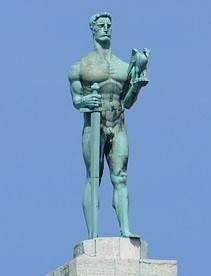
| Beograd ima grb, ima tvrđavu Kalemegdan i spomenik koji se zove „Pobednik“. To su simboli Beograda. | Belgrade has a coat of arms, it has the fortress Kalemegdan and a monument that is called „The Winner“. That are the symbols of Belgrade. |
 |
 |
|
grb Beograda Belgrade coat of arms |
Pobednik the Victor (winner) |
Listening to stories that you’re familiar with can work wonders for your Serbian language learning. This is a powerful technique that will help you remember the vocabulary and absorb pronunciation.
If you liked this lesson, you will certainly enjoy learning Serbian at Serbonika, with many videos like this and other dialogues, texts, vocabulary, grammar explanations and exercises.
by Magdalena Petrovic Jelic
Founder of Serbonika
Serbian language teacher and entrepreneur, language lover and polyglot, but also a mother and a relentless storyteller.
On a mission to create the best web space for learning Serbian: Serbonika.

Recent Posts

The 1st Serbian Language Summer School

All about Teaching and Learning Serbian: an Interview

All Shapes of the Future Tense in Serbian and Croatian Language

All differences between hteti (will) and želeti (want) in Serbian

Feet Speech: 8 Serbian Leg Idioms for English and Norweigian Speakers

False Friends in Serbian for Polish Speakers

Corona Virus in Serbia Fought by Distance Learning

Serbian Christmas Traditions in the 21st Century

Serbian Verbal Aspect, an Essential Guide for Beginners

Fear of Speaking Serbian – 6 Best Tips on Overcoming Your Foreign Language Anxiety

The Magnificent Slivovitz – plum brandy

Talk about Love in Serbian: 15 Ready-to-use Serbian Love Phrases

How similar are Serbian and Croatian? 7 Biggest Differences

Hot Serbian Summer: 8 things to survive the heat in Serbia

Ordering Food in Serbian: Practical Tips to Sound Like a Native
Serbonika
Najbolja metoda za učenje srpskog jezika
The best method to learn Serbian
The 1st Serbian Language Summer School
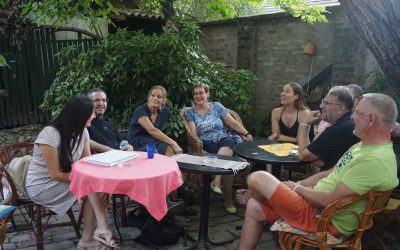
Serbian Language Summer School: an intense experience! Language lessons combined with culture classes, tourism, gastronomy. Many activities with one goal: study Serbian and use it to learn about culture and life
All about Teaching and Learning Serbian: an Interview
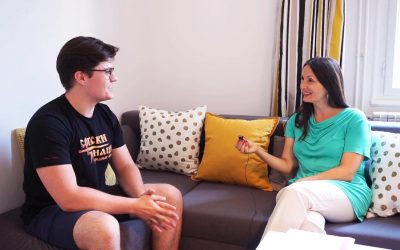
If you wander about the core principles of my teaching and the method I’ve developed for learning Serbian, don’t miss this interview I had with Michael of the English Podcast in Serbia. We talked all about teaching and learning Serbian as a foreigner.
All Shapes of the Future Tense in Serbian and Croatian Language
So many forms to express the future tense in Serbo-Croatian! What are all of them and how to make sense? Read on to learn all shapes of the future tense in Serbian and Croatian.

All differences between hteti (will) and želeti (want) in Serbian
If you’re puzzled about the verbs hteti (will) and želeti (want) in Serbian, unsure when to use which, that’s common. Let’s learn all their differences and similarities to clear up the confusion.
